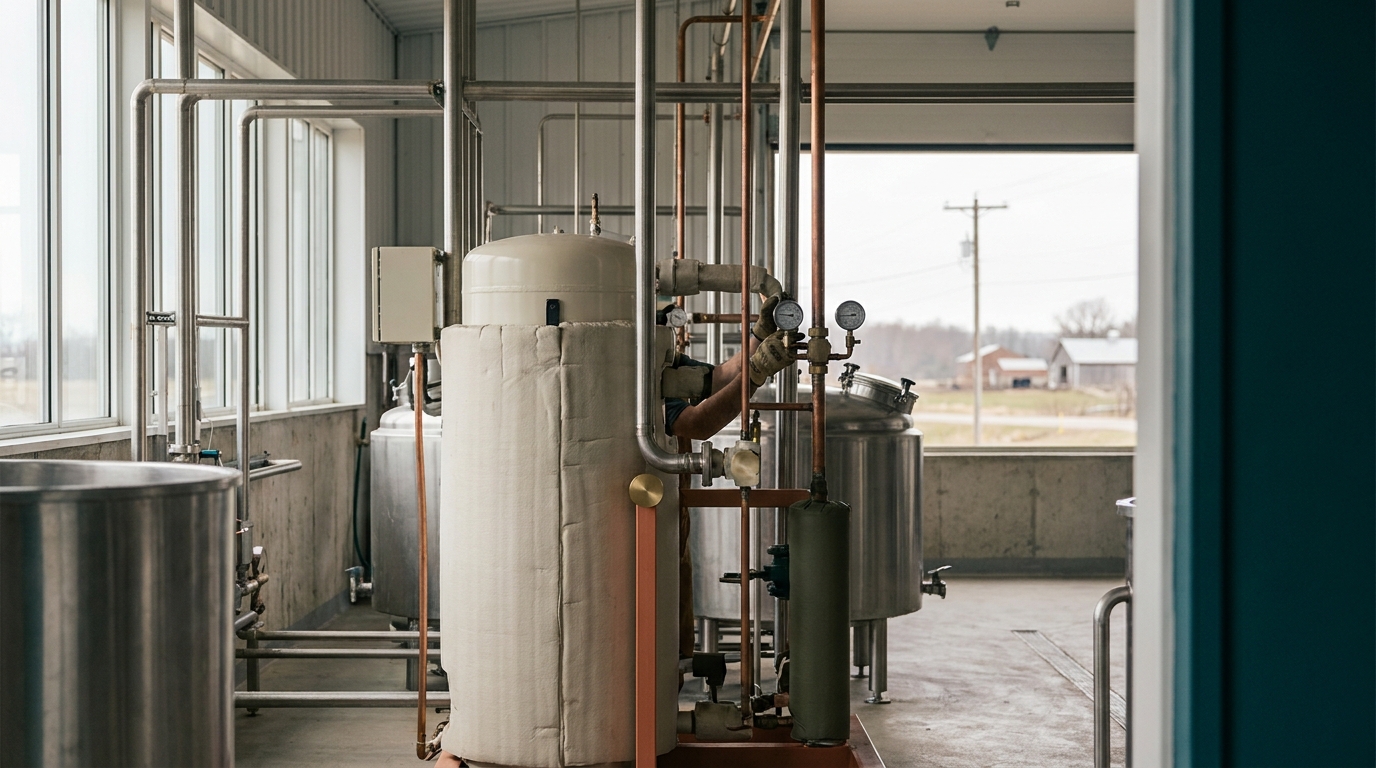
Commercial and industrial facilities face distinct thermal challenges, particularly in food processing sectors requiring precise, high-temperature heating and cooling cycles. A recent deployment at a historic cheddar-making facility highlights how advanced industrial heat pump systems can address these demands while reducing overall energy consumption. By replacing aging steam boilers with high-temperature heat pumps, the facility captured substantial efficiency improvements that directly impacted operating overhead. ## Thermal Integration and Efficiency
Integrating heat pumps into legacy industrial environments often requires careful engineering to manage variable thermal loads. The system captures waste heat from existing refrigeration processes and redirects it to supply the pasteurization and cleaning cycles necessary for dairy production. This approach minimizes the reliance on fossil gas boilers, aligning with broader industrial decarbonization targets. Energy data from the site indicates that significant cost reductions were achieved within the first operational year, demonstrating the financial viability of commercial electrification.
Scalable Lessons for Building Decarbonization
While residential installations frequently dominate headlines, industrial projects provide critical data on grid load management and thermal storage capabilities. Commercial operators evaluating similar retrofits must analyze their specific thermal load profiles and local utility tariff structures to estimate accurate payback periods. As industrial electrification accelerates, these case studies offer a data-driven benchmark for facility managers seeking to mitigate exposure to volatile fossil fuel markets without compromising production standards.