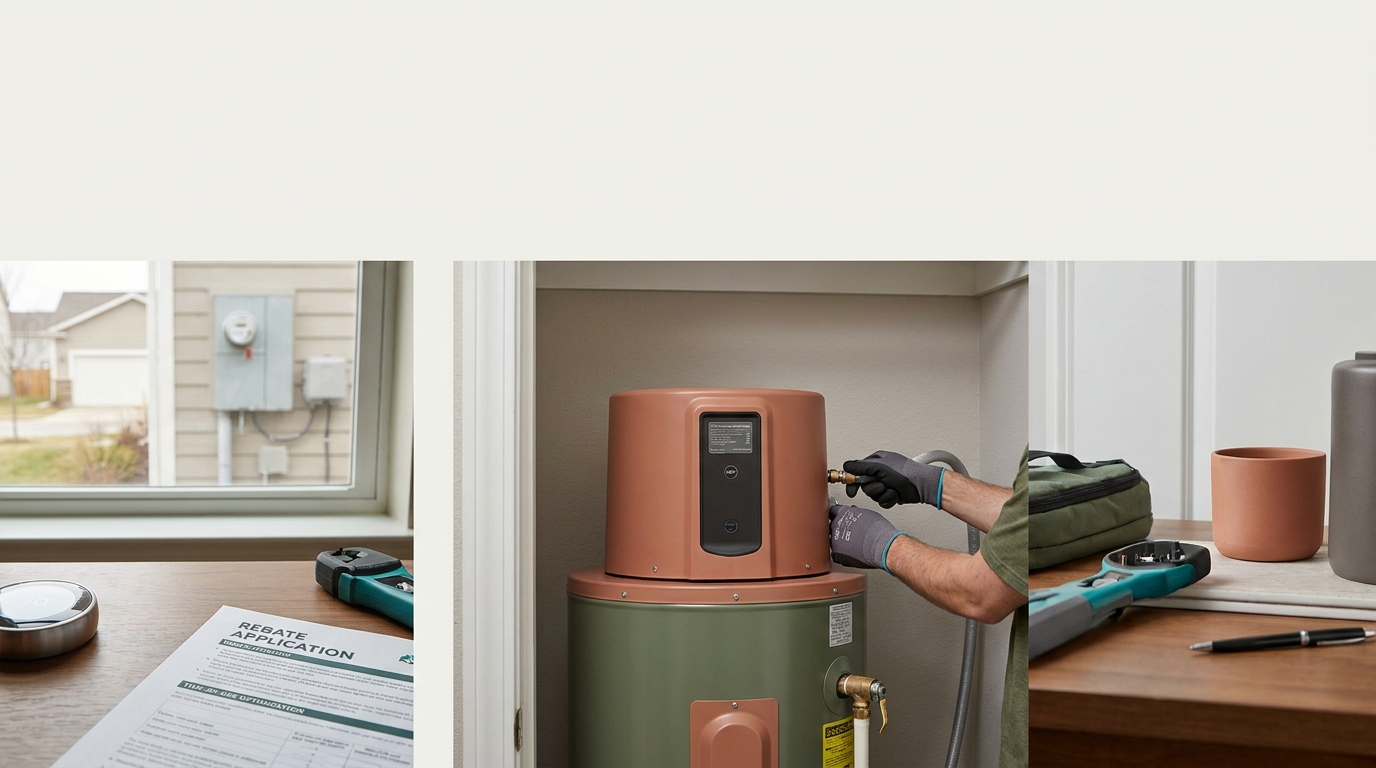
Residential heat-pump water heaters (HPWHs) are evolving beyond simple efficiency upgrades into dynamic grid assets. Recent market entrants feature onboard software designed to communicate with utility pricing signals, preheating water when electricity is cheap or solar generation is abundant, and coasting through expensive peak hours. Because domestic water heating accounts for roughly 18% of typical single-family energy consumption, shifting this load represents a direct mechanism for lowering utility bills under time-varying rate structures.
Form Factors and Retrofit Economics
A primary hurdle for HPWH adoption has been installation friction, particularly the requirement for dedicated 240-volt, 30-amp electrical circuits. Manufacturers have responded by deploying 120-volt plug-in models that operate on standard household outlets, incorporating shared-circuit or dedicated 15-amp configurations. While these units exhibit slower recovery rates than 240V hybrid systems, field testing indicates that properly sized storage tanks (typically 65 to 80 gallons) provide adequate hot water reserve for standard single-family usage patterns without triggering expensive electrical panel replacements.
Operating economics depend heavily on regional rate designs and upfront incentive stacks. In Massachusetts, where electric rates are among the nation's highest, efficiency gains yield rapid returns. For example, Boston 02101 currently scores a SOLID YES on HeatPumpScore (score 72/100, modeled 3.5-year payback under Eversource rates). Combining Mass Save incentives with the federal Section 25C tax credit, which covers 30% of project costs up to a $2,000 cap, significantly offsets the initial hardware premium over baseline resistance tanks.
Grid Interoperability and Standards
The integration of CTA-2045 and OpenADR communication ports is becoming standard, pushed by regional mandates like Washington State's demand-response equipment standards. This connectivity enables utilities to enroll water heaters into virtual power plant (VPP) programs, offering direct customer credits in exchange for fleet-level curtailment during grid stress. For homeowners evaluating equipment, pairing load-shifting capabilities with applicable time-of-use tariffs provides an additional operating cost reduction beyond the baseline 3x to 4x efficiency multiplier of heat pumps.