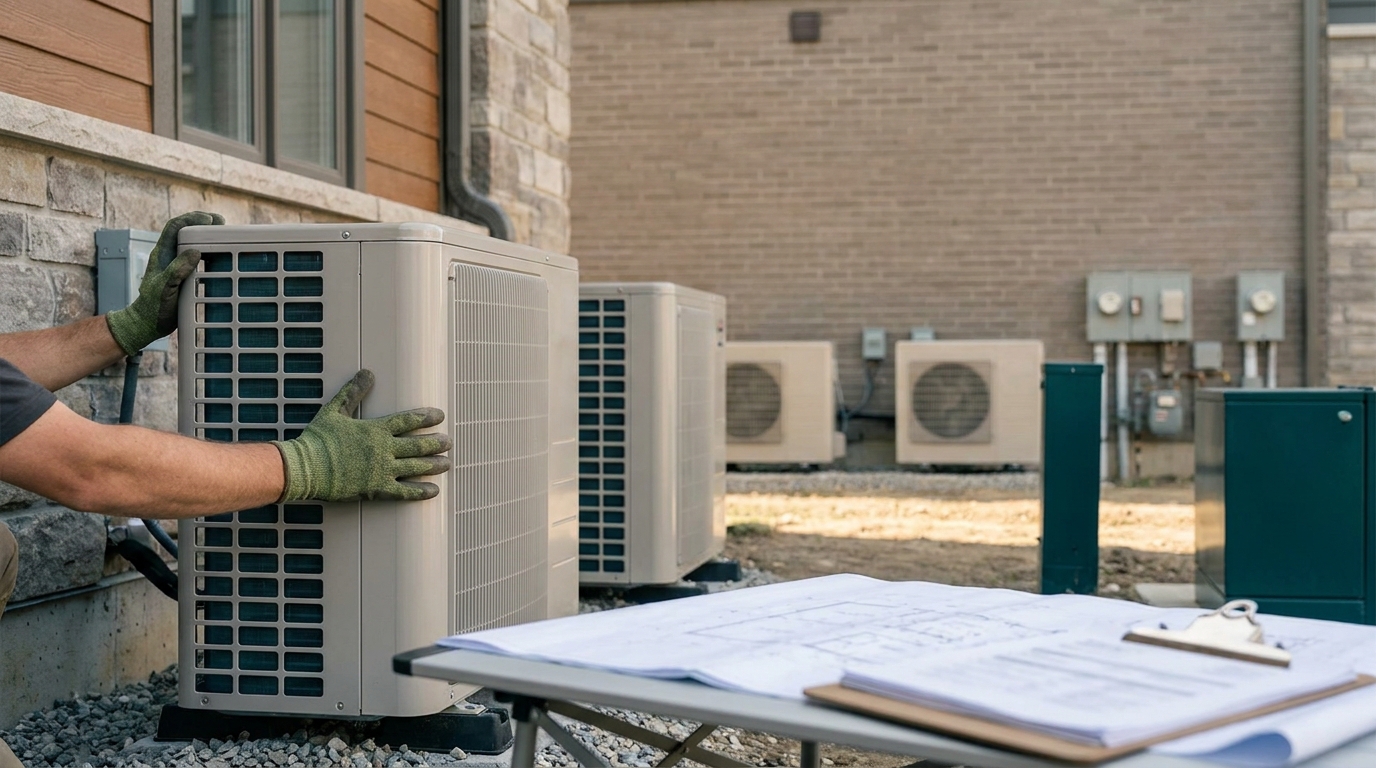
According to newly released Survey of Construction data from the U.S. Census Bureau, electric heat pumps were installed in 53% of new multifamily units completed in 2023, marking the first time the technology has captured a majority share in newly built apartment buildings. The milestone reflects a steady, multi-year climb from a decade ago, when traditional gas furnaces and basic electric resistance systems accounted for the vast majority of multifamily heating specifications.
The shift is largely driven by architectural economics and code compliance. In multifamily construction, split-system and packaged terminal heat pumps offer dual heating and cooling in a single footprint, eliminating the need for expensive interior gas piping infrastructure and dedicated mechanical flues. Developers also face tightening building energy codes in major markets, including Washington State's Energy Code and New York's Title 19 Part 1240, which strongly penalize or outright restrict fossil-fuel infrastructure in new residential builds.
Regional Variance and Grid Considerations
Adoption remains heavily concentrated in the Southeast, where electric heat pumps have long held substantial market share due to moderate heating loads and widespread central air requirements. However, recent data highlights accelerated adoption in the Mid-Atlantic and Pacific Northwest. As state-level building performance standards take effect in places like Maryland and Massachusetts, multifamily developers are prioritizing all-electric design to avoid future retrofit penalties.
While the initial construction shift is significant, ongoing operational economics depend heavily on local electric rate structures. In areas served by high-cost winter electricity rates, multifamily tenants can face elevated winter bills if buildings utilize base-tier heat pump equipment that leans on auxiliary electric resistance during sub-freezing temperatures. Cold-climate performance standards and proper sizing remain central to preventing these operational cost spikes in northern climate zones.