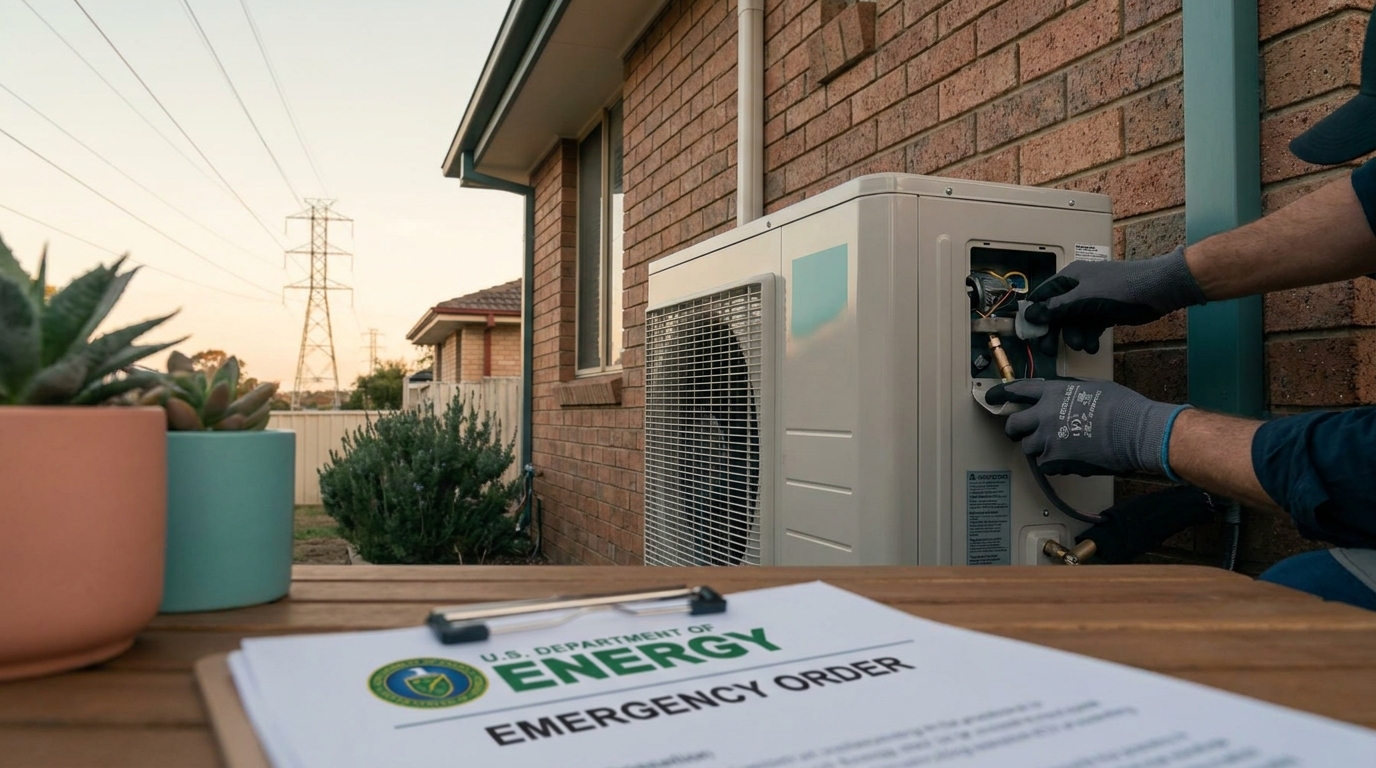
On August 22, 2026, the Department of Energy issued an emergency order under Section 202(c) of the Federal Power Act to maintain critical electric generation across the Mid-Atlantic. The directive authorized specific power plants within the PJM Interconnection footprint to operate at maximum capacity, temporarily bypassing certain environmental permit limitations. Sustained high temperatures drove regional electricity demand to near-peak levels, highlighting the ongoing tension between rapid electrification, summer cooling spikes, and thermal plant retirements.
Cooling Loads and Regional Reliability
The PJM grid coordinates wholesale electricity for 65 million people across 13 states and the District of Columbia. While policy discussions often focus on winter peak loads from electric heating, summer cooling demand driven by standard air conditioning and reversible heat pumps remains the primary stress test for regional grid operators. In utility territories like Baltimore Gas and Electric, where Columbia, MD (21044) currently sits at a WORTH A LOOK tier with an estimated 7.0-year payback, cooling loads represent a significant share of annual residential kilowatt-hour consumption. Similar demand patterns in Yardley, PA (19067) under PECO (WORTH A LOOK, 11.5-year payback) and Newark, DE (19702) under Delmarva (WORTH A LOOK, 9.4-year payback) underscore the geographic breadth of the capacity squeeze.
Balancing Capacity and Efficiency
The emergency declaration serves as a reminder that equipment efficiency metrics directly affect grid resilience. Variable-capacity, inverter-driven heat pumps deliver higher Seasonal Energy Efficiency Ratio (SEER2) ratings than older baseline units, lowering the coincident peak demand per household during extreme heat events. However, widespread adoption also increases total summer baseload electrification. In regions such as Edison, NJ (08820) under PSE&G, where systems show a WORTH A LOOK rating with a 6.9-year payback, grid planners must balance these efficiency gains against overall load growth from new data centers and residential appliance conversions. Federal regulators cited the immediate risk of rolling blackouts as the legal threshold for the Section 202(c) order, emphasizing that supply margins in the Mid-Atlantic remain tightly constrained during multi-day heat domes.