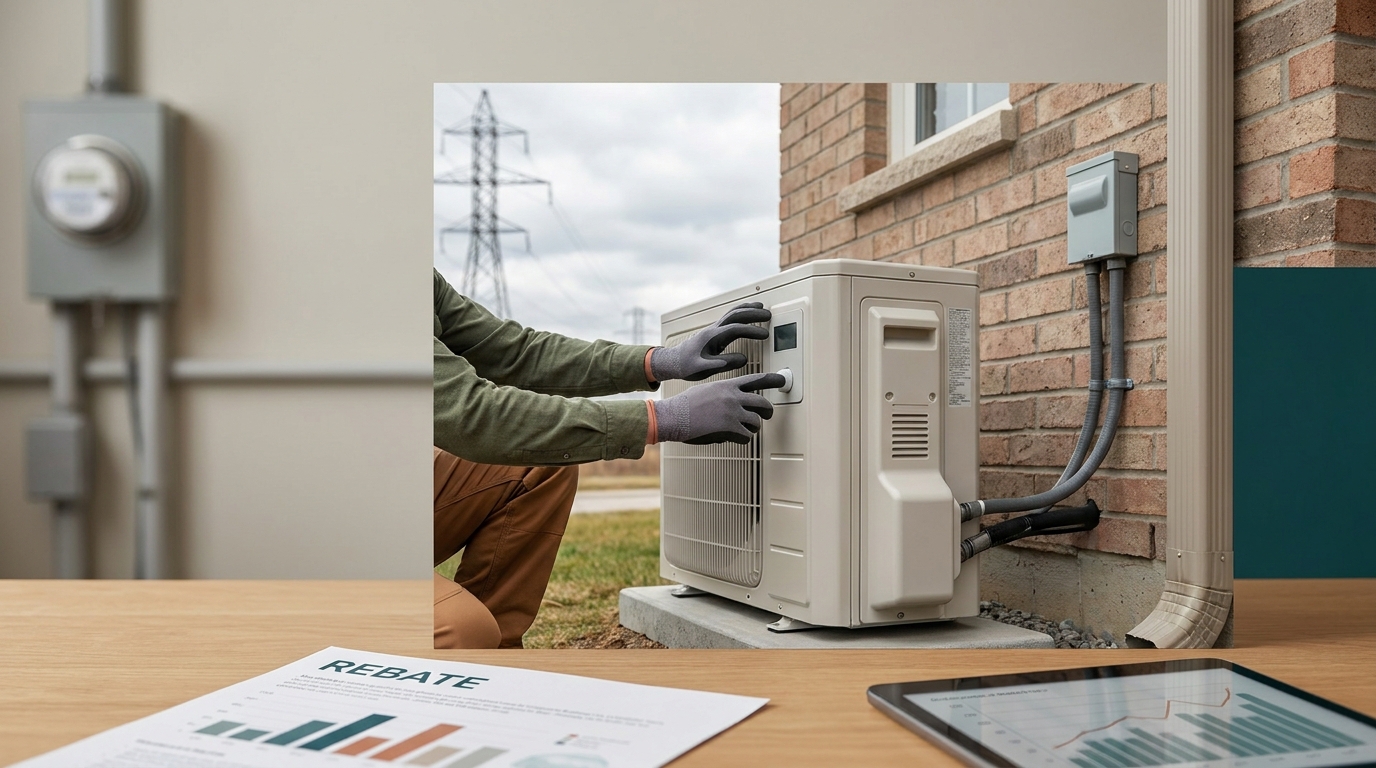
Accelerating the deployment of residential heat pumps alongside targeted building envelope retrofits could deliver $215 billion in annual energy cost savings across the United States, according to a recent analysis from the American Council for an Energy-Efficient Economy (ACEEE). The modeled scenario evaluates nationwide building decarbonization measures through 2050, finding that space-heating and water-heating electrification account for roughly half of the total financial savings projected for the building sector.
Beyond direct consumer savings, the report emphasizes grid-level impacts that challenge common assumptions about electrification and capacity constraints. ACEEE researchers modeled that pairing high-efficiency heat pumps with improved insulation and smart controls could cut peak summer electric demand by up to 20 percent. This reduction stems largely from replacing aging, low-efficiency central air conditioners with modern variable-capacity heat pumps that operate at substantially higher seasonal energy efficiency ratios (SEER2).
Winter Peaks and Efficiency Measures
Winter grid management remains the central engineering challenge for widespread electrification. The ACEEE analysis notes that without aggressive envelope upgrades and the deployment of cold-climate heat pumps (CCHPs), widespread resistive electric backup heating could sharply increase winter peak loads for winter-peaking utilities. However, the modeled deployment pathway shows that prioritizing inverter-driven cold-climate systems and advanced building shells mitigates sharp morning load spikes, maintaining manageable winter demand curves for regional grid operators.
Realizing these projected savings depends heavily on federal and state incentive delivery. Programs funded through the Inflation Reduction Act, including the Section 25C Energy Efficient Home Improvement Credit and the Home Electrification and Appliance Rebates (HEAR) program, are designed to lower the upfront capital hurdle. ACEEE researchers stress that realization rates will ultimately hinge on local utility rate structures, contractor workforce training, and whether state energy offices effectively align rebate distribution with whole-home efficiency standards.