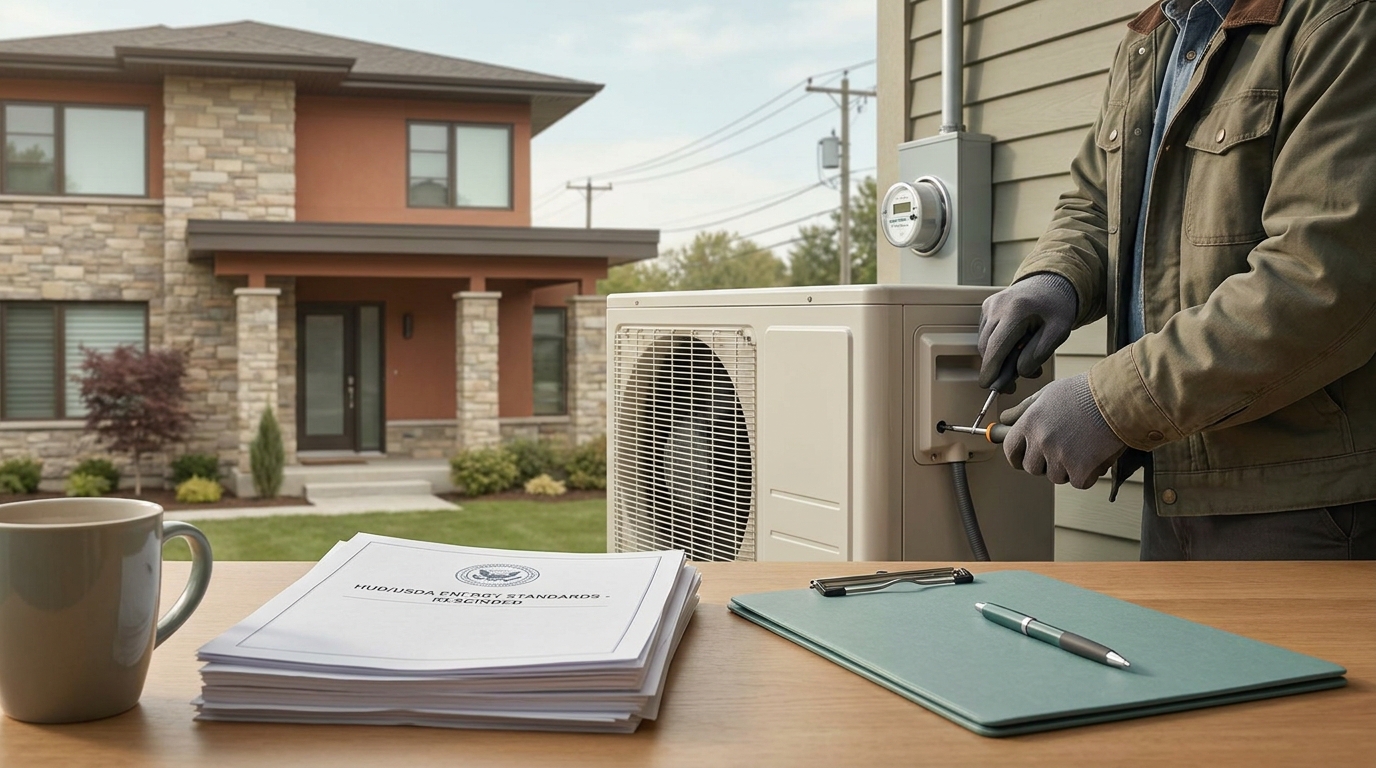
On May 5, 2026, the Department of Housing and Urban Development (HUD) and the Department of Agriculture (USDA) officially rescinded a Biden-era policy that mandated stricter energy efficiency codes for new homes financed with FHA or USDA-backed mortgage loans. This reversal could alter the trajectory of HVAC system demands in the residential construction sector, particularly impacting the adoption rate of high-efficiency technologies like heat pumps.
The original policy, which aimed to align federally financed homes with updated energy codes, was intended to reduce energy consumption and homeowner utility costs. By requiring adherence to more stringent standards, it implicitly encouraged the installation of advanced HVAC systems, including heat pumps, which offer superior efficiency compared to traditional furnaces and air conditioners. The rescinded rule had been a key component of the administration's broader strategy to accelerate home electrification and reduce carbon emissions from the building sector. Its removal means that builders utilizing FHA or USDA financing are no longer federally compelled to meet these higher efficiency benchmarks.
Implications for Home Electrification
The immediate consequence of this rollback is that new homes built with FHA or USDA-backed mortgages will not be federally obligated to meet the higher energy efficiency standards that would have otherwise driven demand for heat pumps. This could slow the market penetration of these systems in certain housing segments. While state and local building codes, along with various utility incentives, continue to promote energy efficiency and heat pump adoption, the absence of a federal mandate for a significant portion of the new housing market introduces a new variable. Homebuyers seeking FHA or USDA loans might find fewer new homes pre-equipped with high-efficiency HVAC, potentially shifting the burden of upgrades to individual homeowners post-purchase.
For the HVAC industry, this decision could lead to a diversification of demand. Manufacturers and contractors might see continued strong demand for high-efficiency systems in regions with robust state-level codes or aggressive utility rebate programs, while demand in other areas might remain more aligned with minimum code requirements. The long-term impact on national energy consumption and carbon reduction goals will depend on how states and local jurisdictions respond, and whether market forces alone are sufficient to drive the adoption of more efficient HVAC solutions without the federal push.