LX TM9V Hybrid
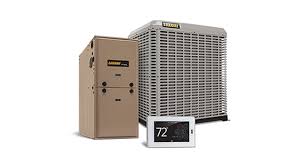
Summary
The York LX TM9V Hybrid is a solid pick for homeowners in climate zones 4A to 6 looking to upgrade to heat pump comfort without breaking the bank on a cold-climate unit. It excels as a dual-fuel retrofit, leveraging your existing gas furnace for backup. With SEER2 ratings between 18 and 20 and HSPF2 of 9.3–10, it offers significant efficiency improvements over older systems. This unit automatically switches to gas backup around 30°F, providing a seamless transition to more cost-effective heating when electric heat pump operation becomes less efficient. It's inverter-driven, ensuring consistent comfort and quieter operation. The biggest red flag? This system requires a functioning gas furnace for its hybrid operation, so if your furnace is past its prime, factor a replacement into your budget.
Who it's for
This unit is ideal for a 2,000 sqft suburban home in zone 5A currently relying on a 15-year-old gas furnace and an aging AC unit. The homeowner wants to reduce their carbon footprint and energy bills without committing to a full cold-climate heat pump installation, which can be significantly more expensive. The TM9V Hybrid offers a pragmatic middle ground, using the gas furnace as a reliable backup for colder days. Another good fit is a homeowner in zone 4B with an older, inefficient central AC and a gas furnace that's still got some life in it. They're looking for improved cooling efficiency and a supplemental heating source that can take over from the furnace for most of the year, reducing gas consumption. The automatic switchover at around 30°F means they don't have to manually manage fuel sources. Finally, consider a family in zone 6 with a well-insulated, 2,500 sqft house where the existing AC is failing. They appreciate the comfort and efficiency of an inverter-driven system but are wary of the higher upfront cost of a dedicated cold-climate heat pump. The York LX TM9V Hybrid provides an affordable entry into heat pump technology, utilizing their current gas furnace for reliable, efficient backup when temperatures drop below its 15°F minimum operating temperature.
Real-world performance
The HSPF2 of 9.3–10 and SEER2 of 18–20 for the York LX TM9V Hybrid translate to substantial energy savings compared to older systems. For a typical home in climate zone 5A, this unit can reduce heating costs by 30-50% annually compared to a 90% AFUE gas furnace, especially during shoulder seasons when the heat pump handles the majority of the load. Cooling costs will see an even greater reduction, potentially 40-60% versus a SEER 14 AC baseline. The inverter-driven compressor means it can precisely match heating and cooling demands, avoiding the inefficient on/off cycling of older, single-stage units. While it has a minimum operating temperature of 15°F, it's designed to switch to gas backup automatically around 30°F for optimal efficiency and comfort. This means it will provide significant heat pump output down to that temperature, relying on the furnace only when necessary, ensuring your home stays warm even on colder days within its climate zone 4A to 6 fit.
Installation notes
Installing the York LX TM9V Hybrid involves the standard considerations for a ducted split system. Line-set length is crucial; excessive runs can impact efficiency and require additional refrigerant charge, so discuss optimal outdoor unit placement with your installer. For ducted systems, ensuring proper plenum sizing and static pressure within your existing ductwork is vital for efficient airflow and quiet operation. An undersized or leaky duct system will negate much of the unit's efficiency gains. Outdoor unit clearances are standard – typically 6-12 inches from walls and at least 24 inches for service access. Most municipalities require permits for HVAC system replacements, so confirm this with your contractor. Expect electrical upgrades if your existing panel can't handle the new unit's requirements. First-time heat pump buyers are sometimes surprised by the need for a condensate drain line for the indoor coil, which must be properly sloped and routed.
Maintenance & warranty
Annual maintenance for the York LX TM9V Hybrid typically costs $150-$300 and includes coil cleaning, refrigerant level checks, electrical connection tightening, and filter replacement. For ducted systems, filter changes should occur every 1-3 months, depending on usage and household conditions. Dirty coils significantly reduce efficiency, so professional cleaning is essential. Warning signs of a refrigerant leak include reduced cooling/heating performance, ice formation on coils, or hissing sounds – address these immediately. The standard warranty is typically 10 years on parts, provided the unit is registered within a specific timeframe (usually 90 days) of installation. Failure to register or lacking proof of annual professional maintenance can void parts of the warranty, so keep meticulous records of all service appointments. Labor warranties are usually provided by the installer and vary.
Common complaints
Owners of dual-fuel hybrid systems like the York LX TM9V sometimes voice concerns about the transition point between heat pump and furnace operation. While designed to be seamless, some report slight temperature fluctuations or audible changes as the system switches modes around 30°F. Noise levels for the outdoor unit, while generally quiet due to its inverter drive, can still be a point of contention for installations close to bedroom windows or patios. Defrost cycles are a normal part of heat pump operation, but some users find the whooshing sound or visible steam surprising, especially in colder, humid conditions. As with any HVAC system, dealer responsiveness and the quality of the initial installation are frequently cited in reviews, highlighting the importance of choosing a reputable contractor. Aesthetic issues are rare but can arise if the outdoor unit placement isn't carefully considered.
Price context
The typical installed price for the York LX TM9V Hybrid, ranging from $7,000 to $11,000, positions it as a competitive mid-range option for dual-fuel systems. This is generally more affordable than dedicated cold-climate heat pumps like the Mitsubishi Hyper-Heat or Fujitsu Halcyon XLTH, which can run $10,000-$15,000+ due to their enhanced low-temperature performance. It's often comparable to other hybrid systems such as the Carrier Infinity 20 or Lennox EL22XPV. The IRA §25C tax credit currently offers 30% of the cost, up to $2,000, for qualifying heat pumps, making the TM9V Hybrid an attractive option for federal incentives. However, it's not cold-climate certified (NEEP ccASHP list: no), so it typically wouldn't be eligible for some state or local rebates specifically targeting cold-climate models. HEEHRA income-qualified programs usually prioritize more efficient, higher-tier heat pumps, so eligibility for those would be less likely.
FAQ
- What does 'inverter-driven' mean for the York LX TM9V Hybrid?
- Being inverter-driven means the compressor in the York LX TM9V Hybrid can vary its speed precisely to match the heating or cooling demand. Unlike older, single-stage units that are either fully on or fully off, an inverter-driven system can run at partial capacity. This results in more consistent temperatures, quieter operation, and significantly higher energy efficiency, contributing to its SEER2 18–20 and HSPF2 9.3–10 ratings. It avoids the energy spikes and drops associated with constant on/off cycling.
- Can the York LX TM9V Hybrid operate solely on electric heat pump mode in cold weather?
- The York LX TM9V Hybrid is designed as a dual-fuel system, meaning it relies on a gas furnace for backup heat. While its heat pump can operate down to a minimum operating temperature of 15°F, it's typically configured to automatically switch to the gas furnace around 30°F for optimal efficiency and comfort. Attempting to force it to run solely on the heat pump below its designed switchover point would result in significantly reduced efficiency and potentially insufficient heating capacity, especially within its climate zone 4A to 6 fit.
- Is the refrigerant R410A in the York LX TM9V Hybrid a concern for future regulations?
- The York LX TM9V Hybrid uses R410A refrigerant. While R410A is currently the industry standard, it has a higher Global Warming Potential (GWP) compared to newer refrigerants like R32 or R454B. The HVAC industry is phasing out R410A in new equipment sales by 2025 in favor of lower GWP alternatives. This doesn't mean your R410A unit will stop working or become illegal to service, but future refrigerant costs might increase, and finding replacement parts for R410A systems could become more challenging in the long term. It's a factor to consider for system longevity.
- What capacity range (2–5 tons) means for my home?
- The 2–5 tons capacity range of the York LX TM9V Hybrid refers to its heating and cooling output. 'Tons' is a measure of a system's ability to remove heat. A 2-ton unit is suitable for smaller homes or well-insulated spaces, while a 5-ton unit is for larger homes or those with higher heating/cooling loads. Proper sizing is critical: too small, and it won't keep up; too large, and it will short-cycle, leading to inefficiencies and reduced comfort. An HVAC professional will perform a load calculation to determine the precise tonnage your home requires for optimal performance within its climate zone.
Often compared with
- Carrier Infinity 20
- Lennox EL22XPV
- Trane XR17